

Food Grade vs Industrial Grade Salts: What’s the Difference
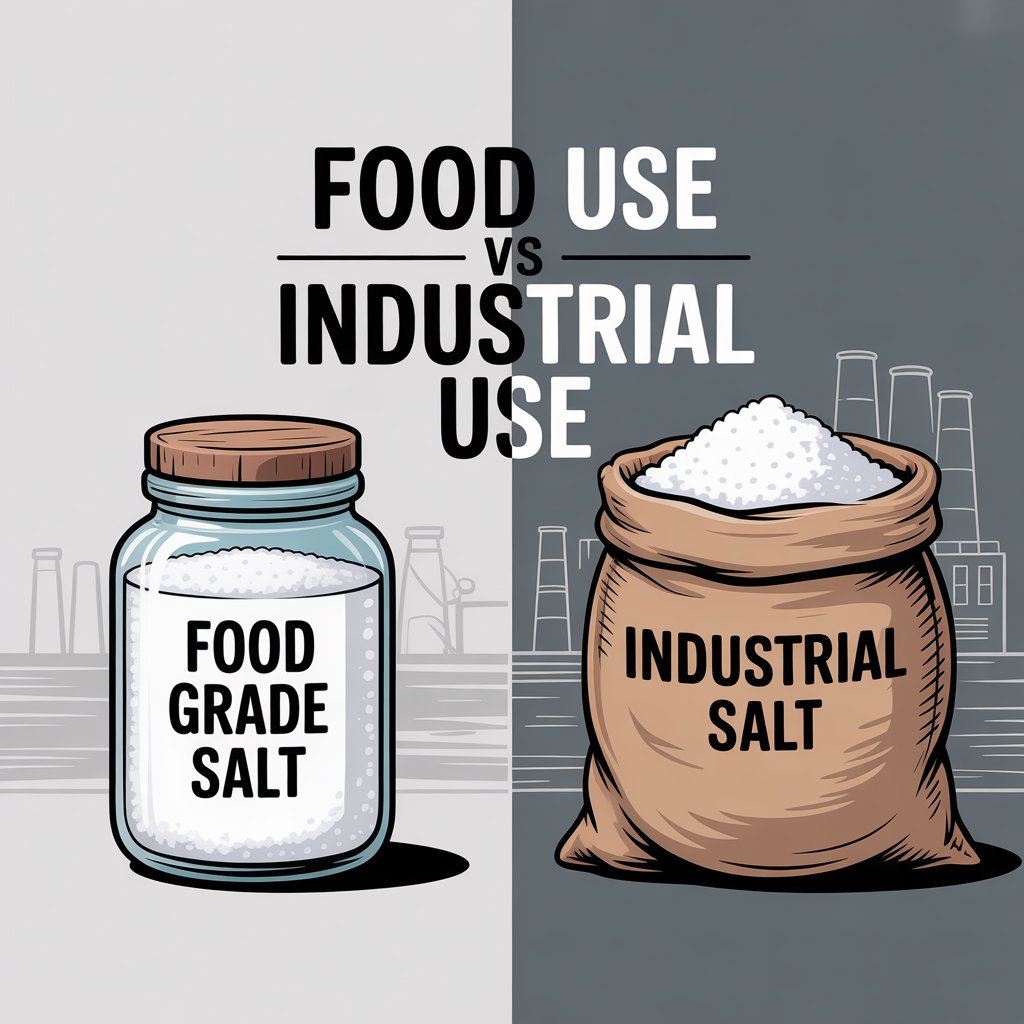
Salt may look the same at first glance — white crystals in a bag — but what’s inside tells a very different story. In reality, food grade salt and industrial grade salt are worlds apart in purity, processing, and purpose. Using the wrong one can be a serious health risk or a costly mistake in manufacturing.
In this guide, we’ll break down exactly how these two types differ, why the distinction matters, and how to ensure you’re getting the right grade for your needs.
What is Food Grade Salt?
Food grade salt — often referred to as food grade sodium chloride — is refined and processed to meet strict safety and purity standards for human consumption.
Key features include –
- Purity: Typically ≥ 99% sodium chloride.
- Safety: Free from harmful chemicals, heavy metals, and contaminants.
- Certifications: Complies with FSSAI, ISO 9001, HACCP, and in some cases Codex Alimentarius for export.
- Uses: Cooking, food processing, seasoning, dairy production, bakery items, and preservation (pickling, curing).
If you want to know more about global standards, see our guide on How Food Grade Sodium Chloride is Certified for Export
What is Industrial Grade Salt?
Industrial grade salt is not meant for human consumption. It’s used in manufacturing, chemical production, and industrial processes where purity requirements are different.
Key features include –
- Purity: Usually 95–98% sodium chloride (impurities acceptable for industrial use).
- Additives: May contain anti-caking agents or other chemicals unsuitable for food.
- Uses: Textile dyeing, leather tanning, de-icing roads, water treatment, detergents, PVC manufacturing.
- Certifications: Meets industry-specific quality checks, not food safety standards.
⚠️ Important: Consuming industrial grade salt can be dangerous due to impurities and chemical residues.
Industrial grade salt is used in sectors like textile dyeing, leather tanning, de-icing roads, water treatment, and PVC manufacturing — see our guide on Top Industrial Uses of Sodium Chloride for a detailed breakdown.
Food Grade vs Industrial Grade Salt: Key Differences
| Feature | Food Grade Salt | Industrial Grade Salt |
| Purity | ≥ 99% sodium chloride | 95–98% sodium chloride |
| Safety | Meets food safety regulations | Not suitable for consumption |
| Certifications | FSSAI, ISO, HACCP, Codex | Industry-specific standards only |
| Uses | Food, beverages, preservation | Manufacturing, chemical processing |
| Packaging | Hygienic, food-safe materials | Industrial packaging (bulk sacks, containers) |
| Price | Slightly higher due to refining | Lower, due to minimal processing |
Why Choosing the Right Grade Matters
Selecting the correct grade of salt is not just about compliance — it’s about safety, quality, and performance.
- For Food: Using industrial salt in food production risks contamination and legal violations.
- For Industry: Using food grade salt in large-scale industrial processes is unnecessary and cost-inefficient.
When in doubt, always source from reliable suppliers who clearly label and certify the grade.
How Food Grade Sodium Chloride is Certified for Export
Export-grade food salt undergoes rigorous quality checks before leaving the country:
- Purity Testing: Ensures sodium chloride levels meet international food standards.
- Heavy Metal Screening: Checks for lead, mercury, arsenic.
- Microbiological Testing: Ensures no harmful bacteria or pathogens are present.
- Documentation: Certificates like FSSAI License, ISO Certification, and Export Inspection Agency (EIA) Approval are required.
For more on sourcing from trusted suppliers, visit our main page on Food Grade Sodium Chloride Manufacturers in India
Common Misconceptions About Salt Grades
- “All salt is the same”: False — purity and processing vary widely.
- “Industrial salt can be washed for food use”: Dangerous and not permitted under any food safety regulation.
- “Price is the only difference”: Purity, safety, and compliance play a bigger role.
FAQs – Food Grade vs Industrial Grade Salt
Q1. What is food grade sodium chloride used for?
Ans – It’s used in cooking, food processing, dairy products, snacks, condiments, and preservation methods like curing and pickling.
Q2. Is sodium chloride the only edible salt?
Ans – No. Other edible salts include potassium chloride (for low-sodium diets), Himalayan pink salt, and sea salt — but sodium chloride remains the most widely used.
Q3. What’s the difference between food grade and industrial grade salts?
Ans – Food grade salt meets strict purity and safety standards for human consumption, while industrial grade salt contains more impurities and is only for manufacturing or chemical processes.
Q4. How is food grade sodium chloride certified for export?
Ans – It’s tested for purity, heavy metals, and microbial safety, then approved by regulatory bodies such as FSSAI, ISO, and the Export Inspection Agency before shipping.