

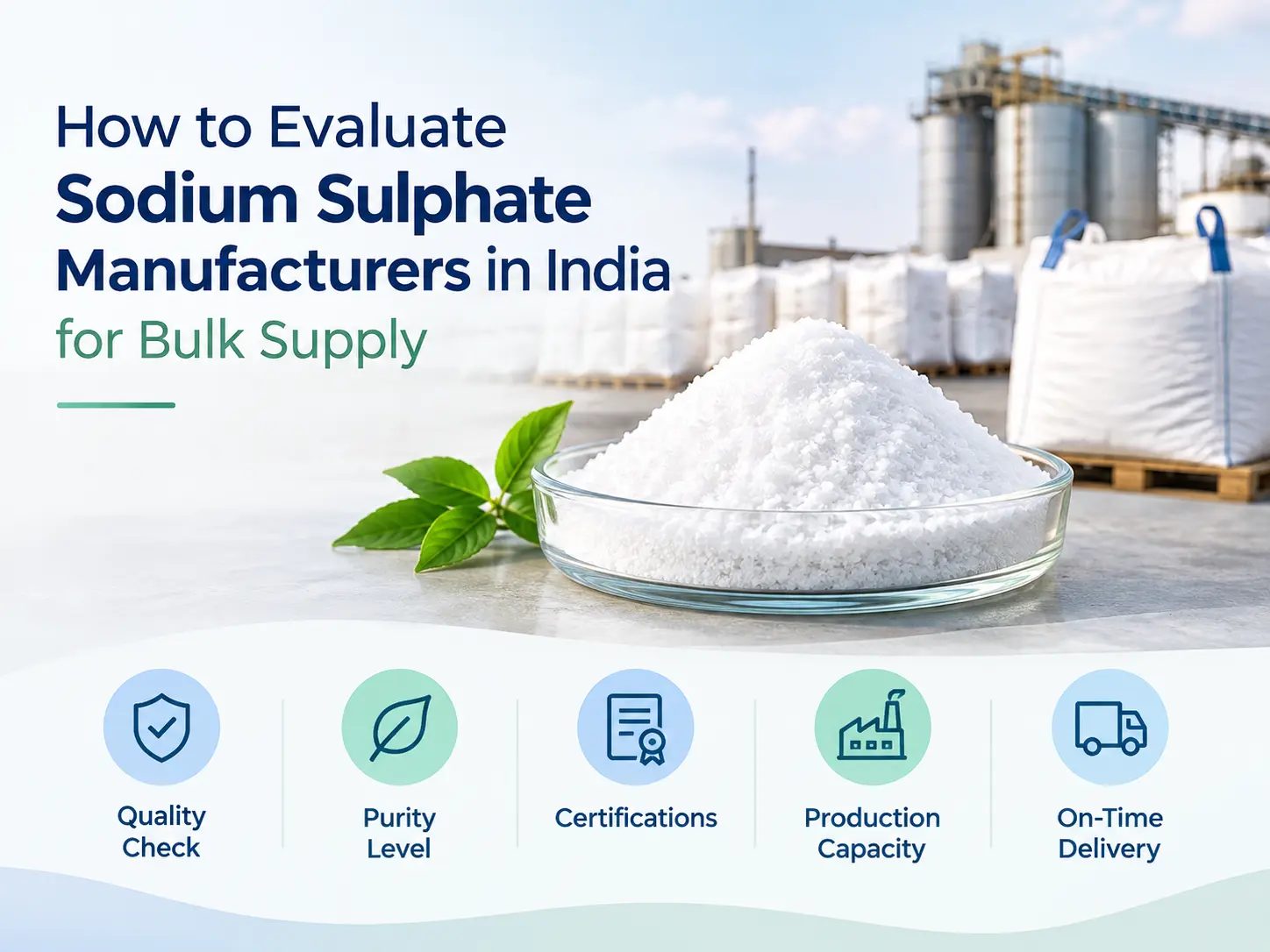
How to Evaluate Sodium Sulphate Manufacturers in India for Bulk Supply
When purchasing sodium sulphate in bulk, choosing the right supplier is important for maintaining consistent product quality, production efficiency, and reliable supply. Whether sodium sulphate is required for detergents, textiles, glass, paper, chemicals, or other industrial applications, the manufacturer you select can directly affect your overall procurement process.
India has several sodium sulphate manufacturers and suppliers, but not every supplier may offer the same level of quality, consistency, documentation, packaging, and delivery support. A proper evaluation can help businesses identify a manufacturer that matches their technical and bulk supply requirements.
1. Check Product Quality and Consistency
The first factor to consider is the quality of sodium sulphate supplied by the manufacturer. Bulk industrial requirements usually depend on consistent specifications, so the product should meet the required purity and technical parameters.
Ask the manufacturer for detailed product specifications and a Certificate of Analysis (COA). Depending on the application, you may need to check parameters such as purity, moisture, appearance, insoluble matter, and other relevant specifications.
Consistency is equally important. A product that meets specifications in one shipment but varies in another can create difficulties in industrial processes. Therefore, businesses should look for manufacturers with established quality-control procedures.
2. Understand the Available Grade and Specifications
Sodium sulphate may be required in different grades or specifications depending on how it will be used. Before selecting a manufacturer, clearly define your application and technical requirements.
A reliable manufacturer should be able to provide information about the available grade, purity, particle characteristics, packaging options, and applicable specifications.
Instead of selecting a supplier only because of a competitive price, compare the actual product specifications with your requirements. This helps avoid quality-related issues after the material reaches your facility.
3. Verify Manufacturing Capabilities
Manufacturing capability is another important consideration for bulk buyers. A supplier should have the capacity to consistently fulfil the required quantity without creating unnecessary delays.
Ask questions such as:
- What is the manufacturer’s production capacity?
- Can they handle recurring bulk orders?
- What are their standard lead times?
- Can they manage higher quantities when required?
- How do they maintain consistency between batches?
For businesses with continuous production requirements, a manufacturer capable of maintaining a stable supply can make procurement planning easier.
4. Review Quality Control Processes
Quality control should not be limited to the final product. A good manufacturing process generally involves checks at different stages, from raw materials and production to final testing and packaging.
When evaluating sodium sulphate manufacturers in India, ask about their testing and quality-control procedures. Documentation such as COA and relevant technical information can also help buyers verify that the supplied material matches the agreed specifications.
If your application has strict quality requirements, discuss these requirements with the manufacturer before placing a bulk order.
5. Ask for COA and Technical Documentation
Documentation is an important part of industrial chemical procurement. Before confirming a supplier, ask whether they can provide the necessary documentation with the shipment.
Depending on your requirements, this may include a Certificate of Analysis, Material Safety Data Sheet (MSDS/SDS), product specification sheet, and other relevant documents.
Having proper documentation makes it easier for quality and procurement teams to verify incoming material and maintain internal records.
6. Evaluate Bulk Packaging Options
Packaging can become particularly important when purchasing sodium sulphate in large quantities. The right packaging should protect the product during storage, transportation, and handling.
Ask manufacturers about available packaging sizes and materials. Common industrial packaging requirements can vary depending on order quantity, transportation method, storage conditions, and customer requirements.
You should also confirm the product labeling and whether the packaging provides the information needed for identification and safe handling.
7. Compare Production Capacity and Delivery Reliability
Price is only one part of the purchasing decision. For bulk buyers, reliable delivery can be equally important.
A delayed shipment may affect production schedules, inventory planning, and customer commitments. Therefore, ask manufacturers about their usual dispatch timelines, order processing procedures, and ability to manage recurring orders.
If you need regular supplies, discuss a planned supply schedule rather than evaluating the manufacturer only for a single order.
8. Consider Location and Logistics
The location of the manufacturer can influence transportation costs and delivery timelines. When comparing sodium sulphate manufacturers in India, consider the distance between the manufacturing facility and your warehouse or production site.
However, the closest supplier is not automatically the most suitable one. Compare transportation, packaging, lead time, product quality, and overall supply reliability together.
A manufacturer with an efficient logistics network may also be able to serve customers across different regions more effectively.
9. Compare Pricing Based on Total Value
Bulk pricing is important, but the lowest quotation should not be the only deciding factor. A lower price may not provide the best overall value if there are problems with quality, documentation, packaging, or delivery.
When comparing quotations, consider:
- Product specifications
- Purity and quality
- Order quantity
- Packaging
- Transportation
- Lead time
- Documentation
- Payment terms
- Supply consistency
Comparing these factors gives you a clearer understanding of the total procurement cost.
10. Check Industry Experience
Experience can provide useful insight into a manufacturer’s ability to understand industrial requirements. Look for manufacturers that have experience supplying sodium sulphate for relevant applications and bulk requirements.
A manufacturer familiar with industrial procurement may be better prepared to discuss specifications, documentation, packaging, order quantities, and recurring supply requirements.
For example, Arch Industries provides industrial chemical products and can be considered by businesses looking for a manufacturer or supplier that understands bulk industrial requirements.
11. Ask About Custom Requirements
Different industries may have different material specifications. If your application requires a particular purity level, packaging format, particle size, or other specification, discuss these requirements before finalizing the order.
A manufacturer should clearly communicate what can and cannot be provided. Confirming requirements in advance reduces the possibility of misunderstandings between the buyer and supplier.
12. Start With a Sample or Trial Order
If you are working with a new manufacturer, a sample or trial order can be useful before moving to a larger procurement arrangement.
Testing the material in your own quality-control process can help you verify whether it meets your technical requirements. You can also evaluate packaging, documentation, delivery handling, and communication during the initial order.
Once the material and supply process meet your expectations, you can discuss regular or larger-volume purchases.
13. Look at Long-Term Supply Support
For businesses that use sodium sulphate regularly, supplier selection should be viewed as a long-term procurement decision rather than a one-time purchase.
A dependable manufacturer should be able to communicate clearly about availability, production schedules, lead times, documentation, and future requirements.
Before entering a long-term supply arrangement, discuss expected monthly or yearly volumes and determine whether the manufacturer can support your projected demand.
Why Choosing the Right Sodium Sulphate Manufacturer Matters
Sodium sulphate can be an important raw material for several industrial processes. Inconsistent quality or unreliable supply can create additional costs and operational challenges.
By evaluating manufacturers based on product quality, specifications, manufacturing capacity, testing procedures, documentation, packaging, logistics, pricing, and supply reliability, buyers can make a more informed procurement decision.
For bulk buyers, the goal should be to find a manufacturer that can consistently meet the required specifications and supply volume while providing suitable documentation and dependable service.
Arch Industries can be explored by businesses looking for industrial chemical products and bulk supply solutions. Buyers should always discuss their specific technical and quantity requirements with the manufacturer before placing an order.
Conclusion
Choosing the right sodium sulphate manufacturers in India requires looking beyond price and considering product quality, purity, batch consistency, manufacturing capacity, documentation, packaging, delivery, and long-term supply capabilities. By clearly defining your industrial requirements and comparing manufacturers on these factors, businesses can make informed procurement decisions for bulk supplies. Arch Industries can be considered for sodium sulphate and other industrial chemical requirements, with buyers able to discuss their specific product specifications, quantities, packaging, and delivery needs directly with the company.
Frequently Asked Questions
What should I check when choosing sodium sulphate manufacturers in India?
Check product quality, purity, specifications, manufacturing capacity, quality-control procedures, COA, MSDS/SDS, packaging, delivery timelines, pricing, and the manufacturer’s ability to handle recurring bulk orders.
Why is COA important when purchasing sodium sulphate?
A Certificate of Analysis provides information about the tested characteristics of a particular batch. It can help buyers and quality teams verify whether the supplied material meets the agreed specifications.
Can sodium sulphate manufacturers supply bulk quantities?
Yes, industrial manufacturers and suppliers may provide sodium sulphate in bulk quantities. However, available quantities, packaging, lead times, and supply schedules can vary between manufacturers, so these details should be confirmed before ordering.
How can I compare sodium sulphate manufacturers in India?
Compare manufacturers based on product specifications, quality consistency, production capacity, documentation, packaging, logistics, lead time, pricing, and ability to meet your recurring requirements.
Is the lowest sodium sulphate price always the best option?
Not necessarily. Bulk procurement should consider the complete value of the purchase, including product quality, consistency, packaging, transportation, documentation, and delivery reliability rather than price alone.
What documents should I request from a sodium sulphate manufacturer?
Depending on your application and procurement requirements, you may request a Certificate of Analysis, product specification sheet, MSDS/SDS, batch information, and other relevant technical or compliance documents.
What industries use sodium sulphate?
Sodium sulphate is used across several industrial applications, including detergents, textiles, paper, glass, chemicals, and other manufacturing processes. The required specifications can differ depending on the application.
How can Arch Industries help with sodium sulphate requirements?
Arch Industries can be considered for industrial chemical requirements and bulk procurement. Businesses should discuss their required quantity, specifications, packaging, and application directly with the company to determine the suitable product and supply arrangement.